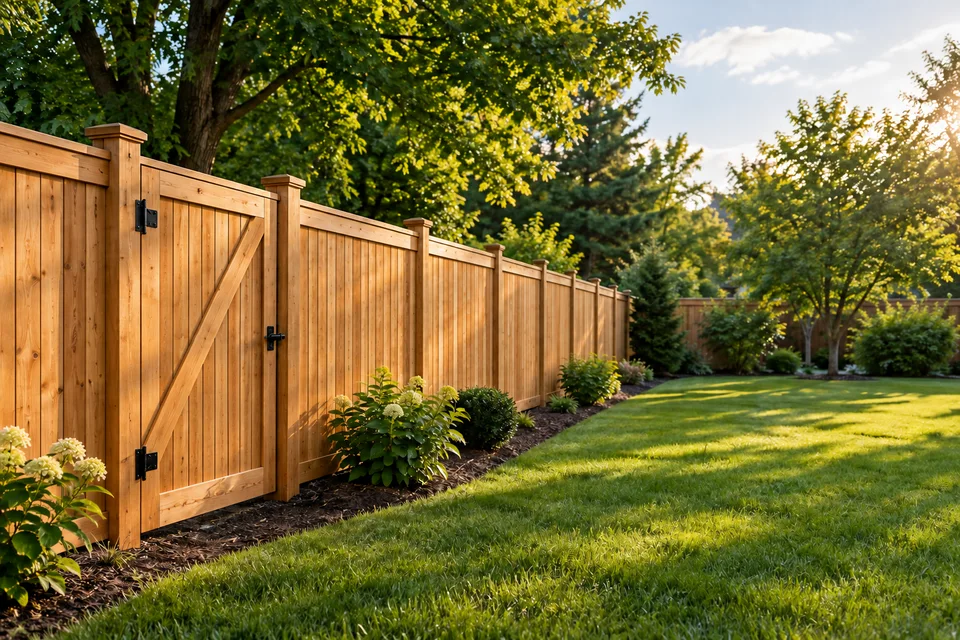
Cedar styles and what they change
Western red cedar can be used for vertical, horizontal, picket, and privacy designs. Cedar is naturally resistant to decay and insects, but resistance is not immunity. Species, grade, posts, hardware, exposure, and finishing all affect how the fence looks and holds up.
- Vertical boardsclean lines and strong screening
- Horizontal boardsmodern look with grade and drainage review
- Picketairflow and partial view
- Solid privacymaximum screening with more material
Finish and exposure
Finish choice affects appearance and maintenance. Preparation, exposure and compatible coatings matter, and different parts of the fence may weather differently.
Follow the selected product’s care instructions and inspect the fence as conditions change. A single repaint schedule will not fit every wood, finish or location.
Solid privacy or open picket?
The right wood design depends on how much screening you want and how much airflow the space needs. Use the comparison below to narrow the choice before layout details are checked.
Swipe across the table to compare all columns →
| Wood design | Screening | Airflow and fit |
|---|---|---|
| Solid privacy | Full screening | More material; can block airflow |
| Open picket | Partial view | Allows airflow; not full screening |
| Horizontal | Can screen with tight spacing | Needs grade and drainage review |
| Vertical | Screening depends on board spacing | Simple layout; check slope and gates |
Details for a wood fence estimate
Turn the style choice into a request that can be compared fairly. Include the property address, approximate length, desired height, wood style, gate count and width, slope or grade changes, and old-fence removal needs.
- Approximate fence length
- Desired height and wood style
- Gate count and width
- Slope or grade changes
- Old-fence removal
- Exact property jurisdiction