Privacy screening options to compare
Full screening usually means a solid panel or closely spaced boards. The material changes upkeep, airflow, and how the fence handles slope.
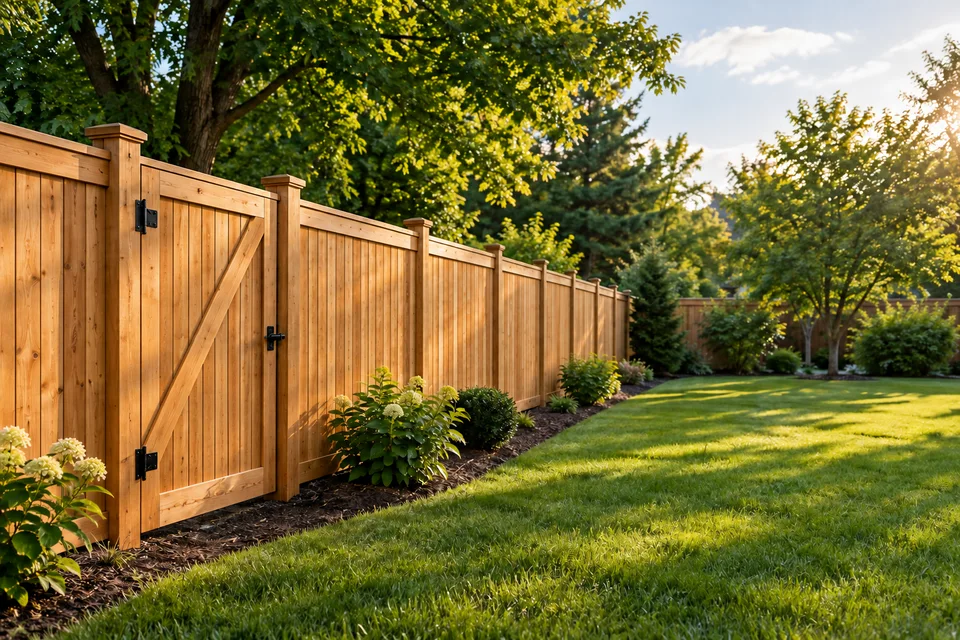
- Solid wood panels or closely spaced cedar boards create a natural screen. Board spacing and layout determine how much of the view remains open.
- Vinyl privacy panels use PVC and provide a uniform, solid screen with mild soap-and-water care for suitable surfaces.
- Chain link with slats starts with open fabric and adds screening, but slat suitability and loading must be checked.
- Aluminum fencing is open-view, so it defines a boundary without screening the yard.
Height, sightlines, and exact property checks
Mishawaka Planning issues improvement location permits for fences. The city FAQ distinguishes front yards, other yards, and corner lots, so the same height idea may not apply everywhere.
Confirm the proposed height for the exact property, yard type and sightline constraints. The written scope should record the approved layout rather than borrow a rule from a neighboring jurisdiction.
Contact Planning for the actual property before ordering panels, especially on corner lots or front-yard fences.
Privacy material trade-offs beyond screening
Screening is only one part of the decision. Compare how each material looks, ages, and fits a sloped yard.
Swipe across the table to compare all columns →
| Material | Screening and appearance | Upkeep and slope notes |
|---|---|---|
| Wood | Solid screening with natural cedar look | Finish choice affects care; panels and posts must suit grade and exposure. |
| Vinyl | Solid privacy panels with a uniform finish | Mild soap cleaning for suitable surfaces; racking limits must be checked. |
| Chain link + slats | Open fabric with added screening | Slat loading and design suitability need checking; not a full privacy guarantee. |