01
What PVC means for vinyl fencing
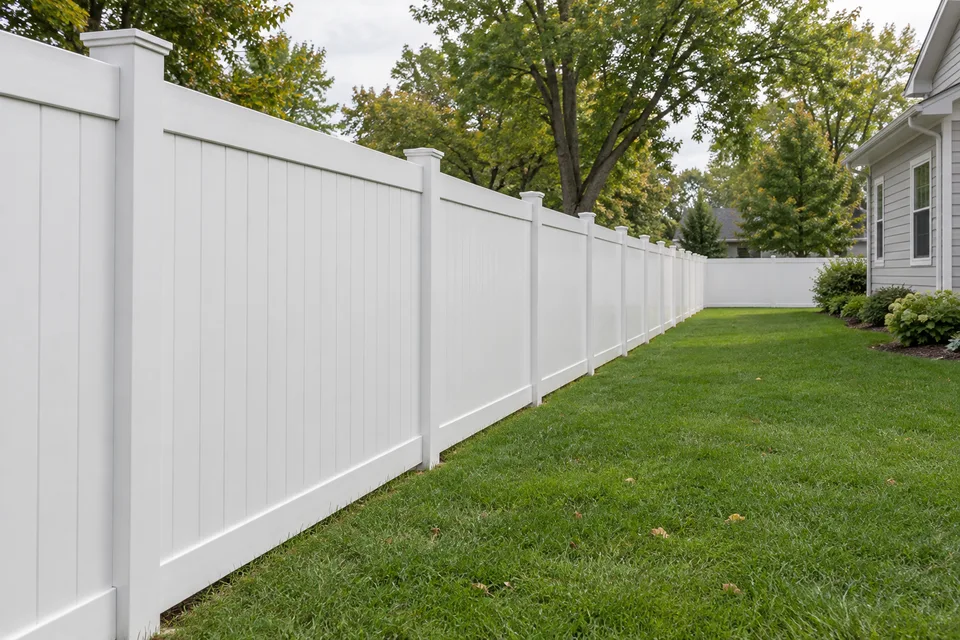
Vinyl fencing uses PVC, a plastic material shaped into panels, pickets, and posts. It can give a yard a uniform look without the natural variation of wood.
Racking lets panels follow a slope instead of stepping in level sections. Some Catalyst vinyl systems can rack where the product allows, but the slope limit must be checked before layout.
Vinyl can suit privacy or picket designs. It is not automatically maintenance-free: debris, gate alignment, and surface care still matter.
02
Vinyl privacy panels vs. vinyl picket
The right choice depends on how much screening you want and how much airflow you need.
Swipe across the table to compare all columns →
| Vinyl style | Screening and airflow | Best fit |
|---|---|---|
| Privacy panel | Screens views fully; limited airflow | Backyards, side yards, and areas where neighbors or streets are close. |
| Picket | Allows view and airflow while marking a boundary | Front yards, pool-adjacent layouts, and spaces where an open look is preferred. |
03
Routine vinyl care that stays gentle
Vinyl is easy to keep tidy, but it still benefits from a simple routine.
- Remove leaves, dirt, and debris that collect along the bottom rail.
- Check gate alignment and latches so the gate keeps closing cleanly.
- Use mild soap and water for suitable vinyl surfaces.
- Follow the selected product instructions and avoid aggressive chemical or pressure-washing habits.
04
Details that make a vinyl estimate useful
A clear scope helps you compare quotes on the same terms.
- Measure the approximate fence length and note the height you want.
- Choose privacy or picket style and note any color preference.
- Count gates, list widths, and describe where each gate should swing.
- Identify slope or grade changes, old-fence removal, and exact property jurisdiction.
- Note any property-line, easement, or association questions before the estimate.