01
Routine fence inspection checklist
Walk the fence line with fresh eyes and note changes in posts, panels and gates.
- Check posts for movement, leaning or soft spots.
- Look for loose, cracked or missing panels and pickets.
- Open and close each gate; check alignment, hinges and latch function.
- Review finish condition on wood and coating condition on metal.
- Remove debris that traps moisture or blocks gates.
02
Material-specific fence care
Use the care method that fits the actual material and product instructions.
Swipe across the table to compare all columns →
| Material | Routine care | Avoid |
|---|---|---|
| Wood | Let finish condition guide cleaning and recoating; preparation and compatible coatings matter. | Assuming every cedar fence needs the same treatment on the same schedule. |
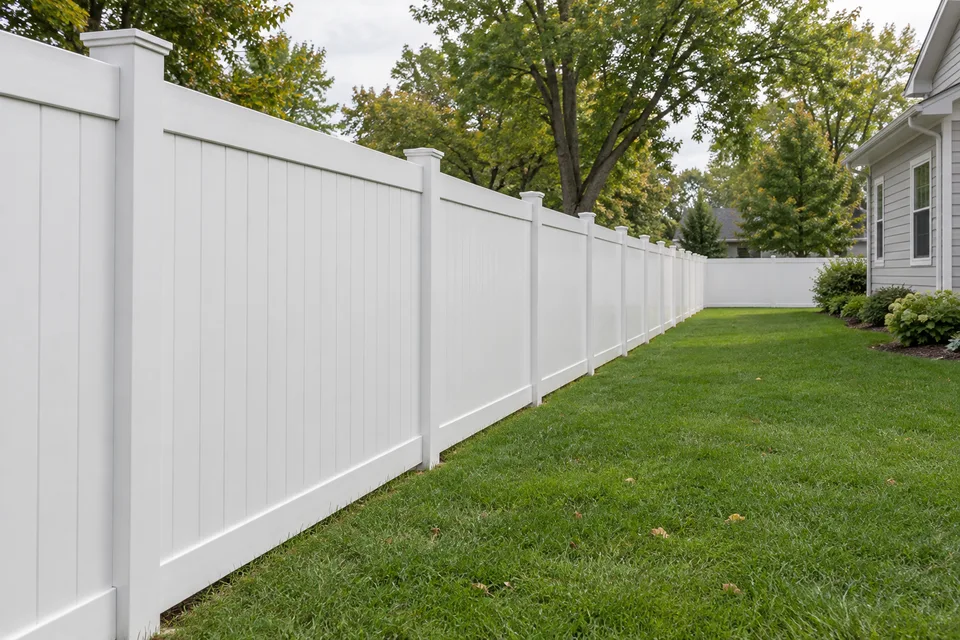
| Vinyl | Mild soap and water works on suitable PVC surfaces; rinse and clean as needed. | Aggressive chemicals or pressure-washing that can damage the surface. |
| Aluminum | Inspect the powder-coated finish; clean gently and touch up as product instructions allow. | Abrasive pads or harsh cleaners that dull the coating. |
| Chain link | Remove debris, check fabric and framework, and look for coating wear. | Overlooking gate hardware and latch adjustment. |
03
Why there is no single maintenance schedule
Exposure, site conditions, finish choice and product instructions all change how often a fence needs attention.
There is no fixed repaint interval and no universal lifespan. Base timing on the actual material, the manufacturer's guidance and what you see during inspections.
If inspection turns up a loose post, broken panel or gate that will not latch, move to repair or replacement planning rather than waiting for a calendar date.