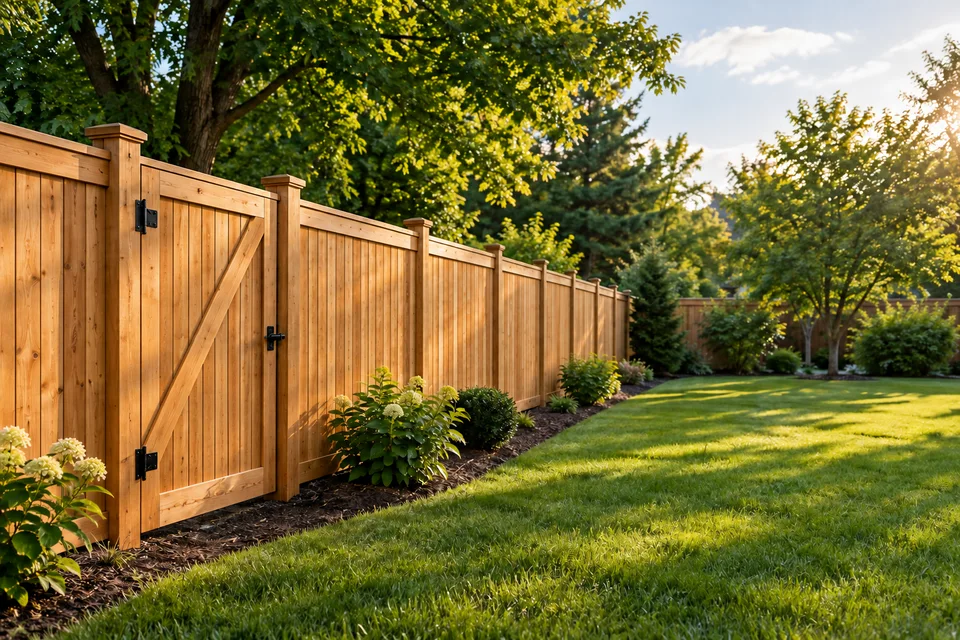
What to check on a failing fence
A repair assessment starts with visible faults: loose posts, damaged panels, gate alignment and latches, and finish condition. Rot, rust, impact damage, and binding gates all point to different repair needs.
The right repair method depends on the material and the product instructions. A repair scope can address one section without assuming the whole fence needs replacement.
- Loose postcheck whether the post or its connection failed.
- Damaged panelidentify the panel, rail, or picket involved.
- Gate bindinglook at hinges, latch, and post alignment.
- Finish wearnote peeling, graying, or rust for the repair plan.
When repair may not be enough
Widespread rot, rust, failed posts, or a layout you want to change can make replacement more sensible than repeated repairs. The decision should turn on extent and condition, not age alone.
Use the repair-or-replace guide to compare the affected area, fence age, material, and the cost of repeated fixes. If the existing line no longer fits gates, access, or privacy goals, a full replacement may be the cleaner path.
What to gather for a repair assessment
Photos and a short description help a repair scope get written without guessing at the whole fence. You do not need to diagnose the exact cause before asking for an assessment.
- Photos of the affected area from a few angles.
- Fence material and approximate length affected.
- Gate issues, including whether the gate drags, sticks, or will not latch.
- Fence age if known, plus any recent damage.