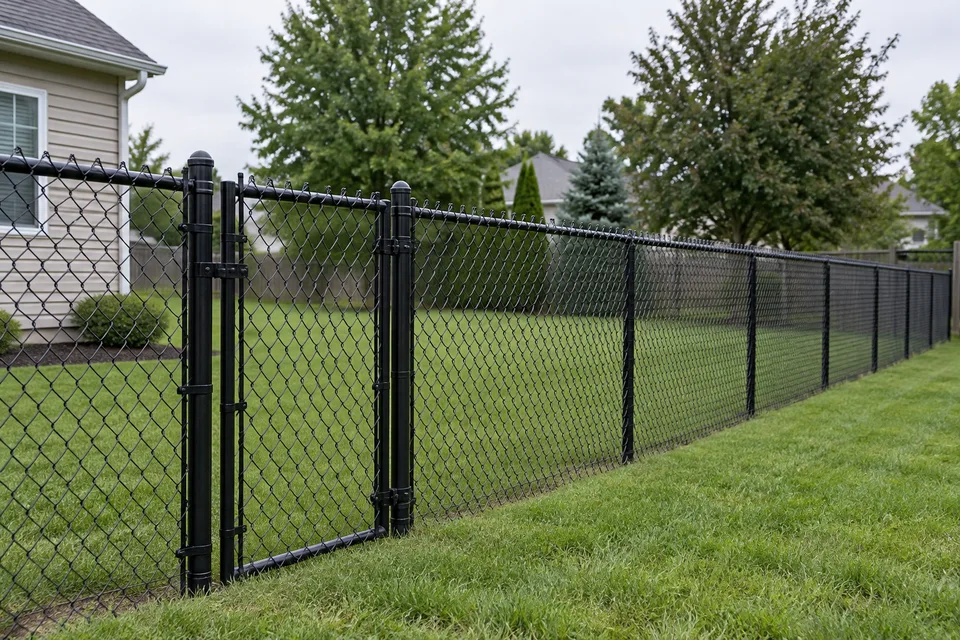
01
What matters most for dog fencing
Start with your dog’s size, energy and habits. A dog that digs, jumps or pushes on gates needs different layout choices than a calm, smaller dog.
Think about what your dog can see and how it reacts at the fence line. Choose open views or more screening to suit those observations. No fence is escape-proof; supervision and secure gate habits still matter.
02
Close the gaps and plan the gate
Small layout details decide whether a dog fence works day to day.
- Check bottom gaps, especially where the yard slopes; stepped layouts can leave larger openings than racked panels.
- Test gate latch operation from both sides, and choose a gate width that fits everyday use and any equipment.
- Confirm racking compatibility and product limits with the selected material before assuming every panel follows a slope the same way.
03
Dog fencing material comparison
Compare materials by how much visibility you want, how much upkeep you accept, and how the fence handles your dog’s behavior.
Swipe across the table to compare all columns →
| Material | Good fit when | Watch for |
|---|---|---|
| Chain link | You want an open view and a familiar barrier for a dog that respects the fence line. | Open fabric gives little privacy; coating and gauge choices affect appearance and durability. |
| Wood | You want privacy, a solid visual boundary and a classic look. | Finish choice affects appearance and upkeep; review bottom gaps and digging behavior. |
| Vinyl | You want a low-maintenance look and easy cleaning on suitable surfaces. | Racking may be possible on some systems, but product limits and gate alignment still matter. |
| Aluminum | You want an open view with a more decorative, powder-coated look. | Picket spacing must match your dog’s size; no fence is escape-proof. |