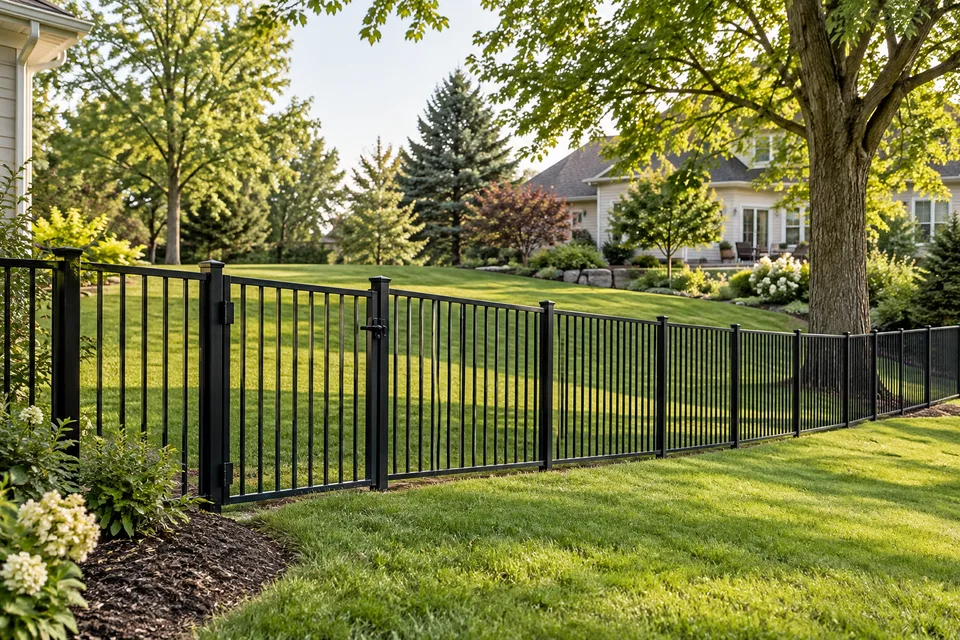
What CPSC recommends for a pool barrier
CPSC recommends barriers around home pools and self-closing, self-latching gates. These measures support safety, but they do not replace active adult supervision. A barrier is one layer of protection, not a childproof guarantee.
Climbable objects can defeat a barrier. The local authority confirms the applicable layout, height, gaps, and gates for the exact property because national recommendations are guidance, not the local mandatory code.
- Choose a barrier that separates the pool area from the house and yard.
- Plan gates to self-close and self-latch, then check that they close reliably.
- Keep furniture, toys, and other climbable objects away from the barrier.
- Have the local authority confirm layout, height, gaps, and gate requirements for the property.
Material and layout choices for pool areas
Aluminum preserves views and is often chosen for pool-adjacent fencing. Vinyl can create more privacy, while chain link uses open fabric that keeps sightlines open. The layout still has to account for gate swing, latch position, and objects someone could climb.
No fence makes a pool childproof. Check the gate regularly, keep climbable objects away and combine the barrier with active adult supervision.
Who confirms pool fence rules locally
The local authority confirms requirements for the exact property. Mishawaka, South Bend, St. Joseph County, and Osceola have separate pathways, so a postal address alone does not settle the rule.
- Use CPSC recommendations as safety guidance, not as the local mandatory code.
- Contact the correct office for the property before finalizing height, gaps, layout, or gate details.
- Keep a written record of the layout and approvals with your project scope.